The Future of Zanzibar Real Estate: What the Next Decade Holds for East Africa's Rising Star

Reading time: 5 minutes
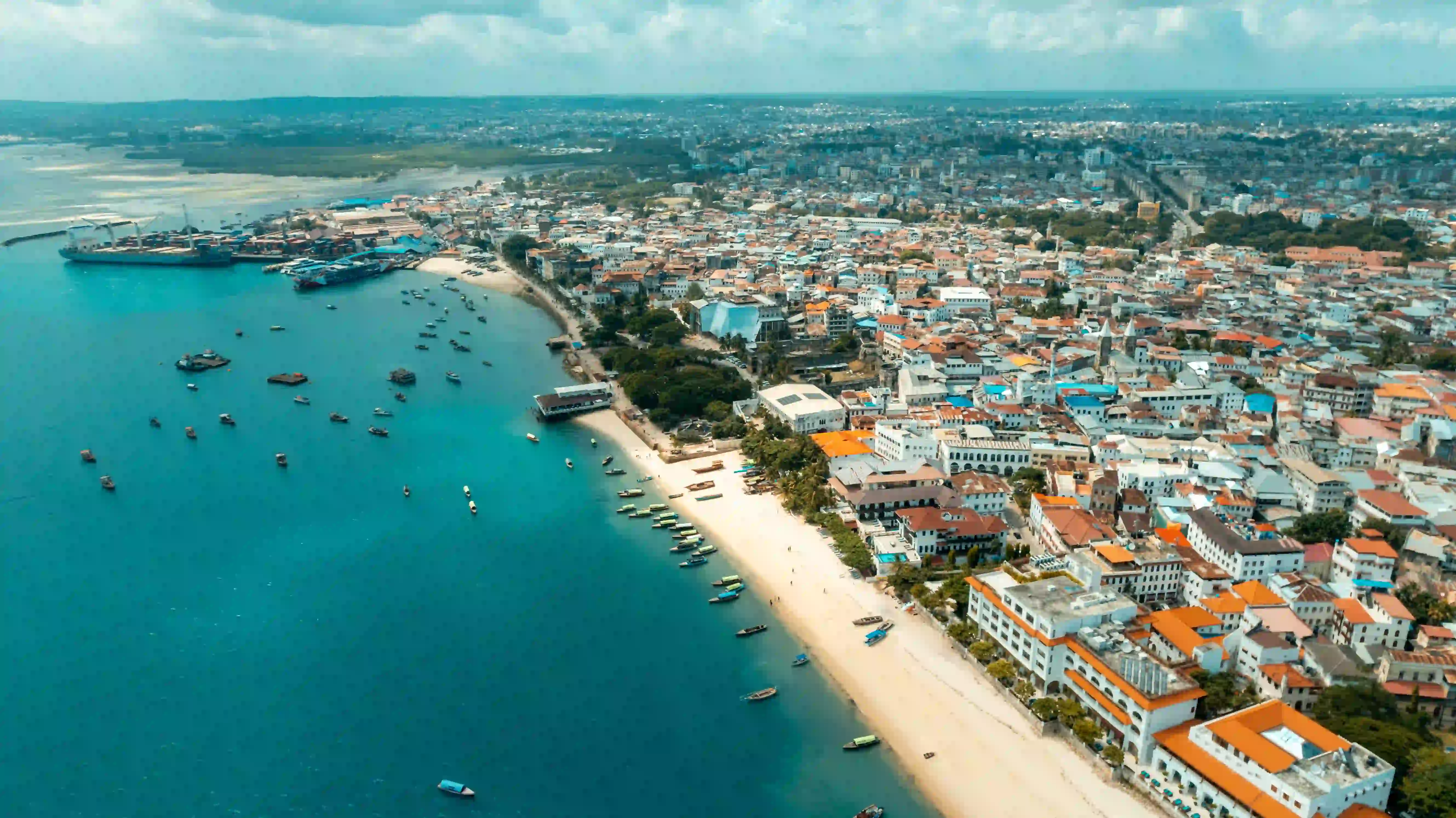
ZANZIBAR, Tanzania — Stand on the white sands of Zanzibar's northeast coast at dawn, and you'll witness something remarkable: cranes dotting the horizon where dhows once sailed alone. Construction sites humming with activity in villages that operated on generator power within living memory. International buyers touring properties with earnestness that suggests serious capital about to be deployed.
This archipelago, long celebrated for its spice trade and Stone Town's labyrinthine streets, is now at the center of an ambitious real estate transformation that's drawing investors from Dubai to Geneva, from Nairobi to New York.
The numbers tell a compelling story. Property values in prime coastal zones have surged by double digits annually over the past five years, outpacing many established markets that investors once considered safe havens. Hotel occupancy rates exceed 85 percent during peak season, with rates climbing 8-12 percent annually. International arrivals grew 47 percent year-over-year in 2024, straining infrastructure that's racing to keep pace.
But what's happening here transcends mere statistics—it represents a fundamental reimagining of what island development can look like in the 21st century. And the choices being made today will determine whether Zanzibar becomes a model of sustainable growth or another cautionary tale of paradise paved.
The Five Forces Shaping Zanzibar's Future
1. The Infrastructure Inflection Point
The Tanzanian government has committed $815 million to infrastructure improvements over the next four years—a figure that would be remarkable for a nation of Tanzania's size under any circumstances, but becomes extraordinary when you consider that Zanzibar accounts for less than 3 percent of the country's population.
This isn't distributed spending across multiple priorities. It's laser-focused on the infrastructure that makes luxury tourism and real estate viable: airport expansion to accommodate direct long-haul flights, road networks connecting development zones to Stone Town, electrical grid improvements ensuring stable power, and fiber-optic telecommunications bringing Zanzibar's connectivity to standards that would satisfy London or Singapore.
The airport expansion alone—$180 million transforming capacity from 1.5 to 3 million passengers—represents the single largest infrastructure project in the archipelago's history. When completed in Q3 2026, it will eliminate the connection requirement that currently limits European and Asian visitor growth. Direct flights from Frankfurt, Paris, Madrid, and Abu Dhabi have already been announced pending the expansion's completion.
"Government infrastructure spending is the best market indicator available," notes Marcus Thompson, an infrastructure analyst who's tracked African development projects for two decades. "They're betting nearly a billion dollars that Zanzibar's tourism and real estate boom continues. That's conviction that matters."
2. The Institutional Capital Arrival
Five years ago, institutional investors and international hotel brands barely registered Zanzibar on their radar. Today, they're competing for the best sites with urgency that suggests they see a closing window.
Marriott International announced plans for a 180-room resort with 40 branded residences in Michamvi—the company's first branded residence project in East Africa. Hilton is in advanced negotiations for a Nungwi site. Four Seasons has conducted site studies on three locations. These brands don't commit capital lightly, and they don't pursue markets where they question long-term viability.
But the institutional arrival carries implications beyond brand name validation. When major hospitality groups enter markets, they bring operational standards, staff training programs, and marketing reach that elevate entire destinations. They also compress returns for investors—branded residences typically yield 6-8 percent, substantially less than the 10-15 percent independent properties currently achieve.
The message: exceptional returns reflect market inefficiency that institutional capital will arbitrage away. Those windows don't stay open indefinitely.
3. The Environmental Reckoning
The question occupying thoughtful developers and government planners isn't whether growth continues—that momentum seems irreversible—but whether the island can grow without losing the soul that made it magnetic in the first place.
Can development coexist with the fishing villages that give the coastline its character? Can luxury resorts operate alongside the spice farms that perfume the interior? Can international capital flow in without local communities being swept aside? Can coral reefs survive the runoff and coastal disruption that development inevitably produces?
Early indications suggest it can—but the next decade will be decisive. The precedents being established now, the relationships forged between developers and communities, the environmental standards enforced or ignored, will determine whether Zanzibar becomes a model for how development can be done differently.
Several encouraging signs:
Strict Coastal Zoning: The Revolutionary Government of Zanzibar has maintained surprisingly rigid coastal development restrictions, limiting beachfront construction to 30 percent of developable coastline and requiring setbacks that preserve beach access.
Environmental Impact Assessment Requirements: All developments exceeding $500,000 investment must complete rigorous EIAs that include marine impact studies, wastewater management plans, and biodiversity protection measures. Enforcement has improved markedly, with two major projects denied permits in 2024 for inadequate environmental protections.
Community Benefit Provisions: New regulations require developments exceeding 50 units to fund community infrastructure—typically schools, health clinics, or water systems. This formalizes the community investment that smart developers were already making voluntarily.
Reef Protection Initiatives: Government-developer partnerships are funding coral restoration and monitoring programs that recognize healthy reefs as economic assets, not just environmental concerns.
But challenges remain formidable. Water scarcity during dry seasons. Waste management infrastructure that lags development pace. Pressure on freshwater aquifers that climate change is already stressing. The tension between growth that benefits islanders and growth that excludes them.
4. The African Middle Class Emergence
While international attention focuses on European retirees and Middle Eastern wealth, a demographic shift is quietly reshaping Zanzibar's buyer profile: the African middle class is arriving.
Kenyan professionals purchasing weekend retreats. Ugandan entrepreneurs seeking investment diversification. Ethiopian executives drawn by political stability their home countries lack. Nigerian tech founders allocating capital to markets less saturated than Lagos or Abuja.
This buyer segment—currently 30-35 percent of purchasers but projected to reach 50 percent by 2030—brings different expectations and different spending patterns. They travel more frequently, use properties more actively, and care deeply about mainland African accessibility that Europeans barely consider.
"Everyone obsesses over the Europeans," notes James Mboya, who tracks African real estate trends. "But the African buyer is the future. They're closer, they travel more frequently, and there are millions of them entering the income brackets where Zanzibar property becomes accessible. That domestic African demand is the untold story."
5. The Climate Migration Factor
Finally, a factor that's uncomfortable to discuss but impossible to ignore: climate migration. As global temperatures rise and extreme weather events intensify, traditionally desirable locations are becoming measurably less desirable.
Caribbean islands face escalating hurricane risk. Mediterranean coasts grapple with record heat waves that make summer months increasingly unlivable. Florida real estate confronts insurance crises as climate risk pricing becomes sophisticated. California battles wildfires with frequency that terrifies potential buyers.
Zanzibar, positioned 6 degrees south of the equator, largely avoids hurricanes while maintaining year-round warmth. The island faces climate challenges—rising sea levels, coral bleaching, changing rainfall patterns—but compared to many alternatives, the risk profile remains relatively favorable.
"Climate migration isn't future speculation anymore—it's current reality," explains Dr. Sarah Mitchell, a climate economist. "Wealthy individuals are already repositioning assets toward locations with favorable long-term climate prospects. Zanzibar checks several boxes: political stability, infrastructure investment, tourism fundamentals, and climate resilience relative to alternatives. That combination increasingly matters."
Three Scenarios for the Next Decade
Optimistic Scenario: The Sustainable Boom
Disciplined regulation preserves environmental quality while growth continues. Infrastructure investments prove adequate to support development without infrastructure failure becoming limiting factor. Community benefit provisions ensure local buy-in. Property values appreciate 8-12 percent annually through 2035. Rental yields compress to 6-8 percent as supply increases but remain attractive compared to established markets. Zanzibar establishes itself as East Africa's premiere luxury destination—the region's answer to Mauritius or the Seychelles.
Probability Assessment: 45%
Base Case Scenario: Controlled Growth with Growing Pains
Growth continues but infrastructure struggles to keep pace. Power outages and water shortages become more frequent during peak season. Some environmental degradation occurs despite regulations. Community tensions emerge around developments that prioritize profit over partnership. Property appreciation moderates to 5-7 percent annually as supply catches demand. Rental yields stabilize at 7-9 percent. Zanzibar succeeds but falls short of its full potential.
Probability Assessment: 40%
Pessimistic Scenario: The Paradise Paved
Inadequate regulation allows overdevelopment. Coral reefs suffer significant degradation. Water scarcity becomes crisis during dry seasons. Community backlash against development creates political instability. Environmental quality decline reduces tourism appeal. Property values stagnate or decline in real terms. Investors who overpaid at peak face substantial losses. Zanzibar becomes cautionary tale of unsustainable growth.
Probability Assessment: 15%
What Investors Should Watch
Leading Indicators of Sustainable Growth:
- Coral reef health metrics: Declining reef quality predicts eventual tourism decline
- Water table monitoring: Aquifer stress indicates infrastructure inadequacy
- Community satisfaction surveys: Local resentment precedes political instability
- Environmental enforcement actions: Government willingness to deny permits signals serious regulation
- Repeat visitor rates: Declining repeat visitation suggests quality degradation
Warning Signs:
- Reef condition reports showing significant decline
- Dry season water rationing becoming norm rather than exception
- Community protests or developer-local conflicts increasing in frequency
- Permit approvals accelerating despite inadequate environmental reviews
- Major hotel brands withdrawing or delaying projects
The Investor's Dilemma
For those weighing investment decisions, the future presents a fascinating dilemma: The highest returns likely lie in the near term—before institutional capital compresses yields and before supply catches demand. But the greatest long-term value accrues to properties in developments that prioritized sustainability, community investment, and environmental protection.
The temptation is to focus entirely on near-term opportunity. But the investors who'll prosper in Zanzibar's future are those who recognize that the best investments aren't the ones that maximize return today—they're the ones that remain valuable tomorrow.
Properties in environmentally responsible developments. Projects that invested in community relationships. Buildings designed to last generations rather than flip quickly. Developments that treated sustainability as necessity rather than marketing.
These properties will command premiums as environmental quality becomes increasingly scarce. They'll face fewer regulatory obstacles as standards tighten. They'll appreciate faster as buyer sophistication increases. And they'll provide the lifestyle benefits that initially attracted people to Zanzibar—benefits that can't exist if paradise becomes pavement.
The Question That Remains
The transformation of Zanzibar's coastline will continue—of that there is little doubt. The capital is flowing, the infrastructure is arriving, the institutional validation is occurring. The island's moment has arrived.
The question isn't whether growth happens. It's whether growth happens wisely. Whether the lessons learned in Bali and Phuket and Cabo—places that grew too fast, built too carelessly, and lost the magic that made them special—will inform better choices in Zanzibar.
Early indications suggest they might. The regulations are tightening, not loosening. The community engagement is deepening, not fading. The environmental consciousness is growing, not diminishing. But the decisive years lie ahead.
For investors, the message is clear: opportunity exists, but not indefinitely. The window for outsized returns is measured in years, not decades. But the properties worth owning aren't necessarily the ones offering the highest immediate yields—they're the ones that will still be desirable when your children inherit them.
The future of Zanzibar real estate will be determined by the choices made in the next thirty-six months. Those who choose wisely—who invest not just in properties but in a vision of sustainable luxury—may find themselves not just profitable, but genuinely proud of what they've helped create.
Read more about the progress
Stay informed with our latest updates and insights on real estate trends and tips.