Zanzibar's Luxury Real Estate Boom: Tourism Growth Drives Investor Interest


Reading time: 5 minutes
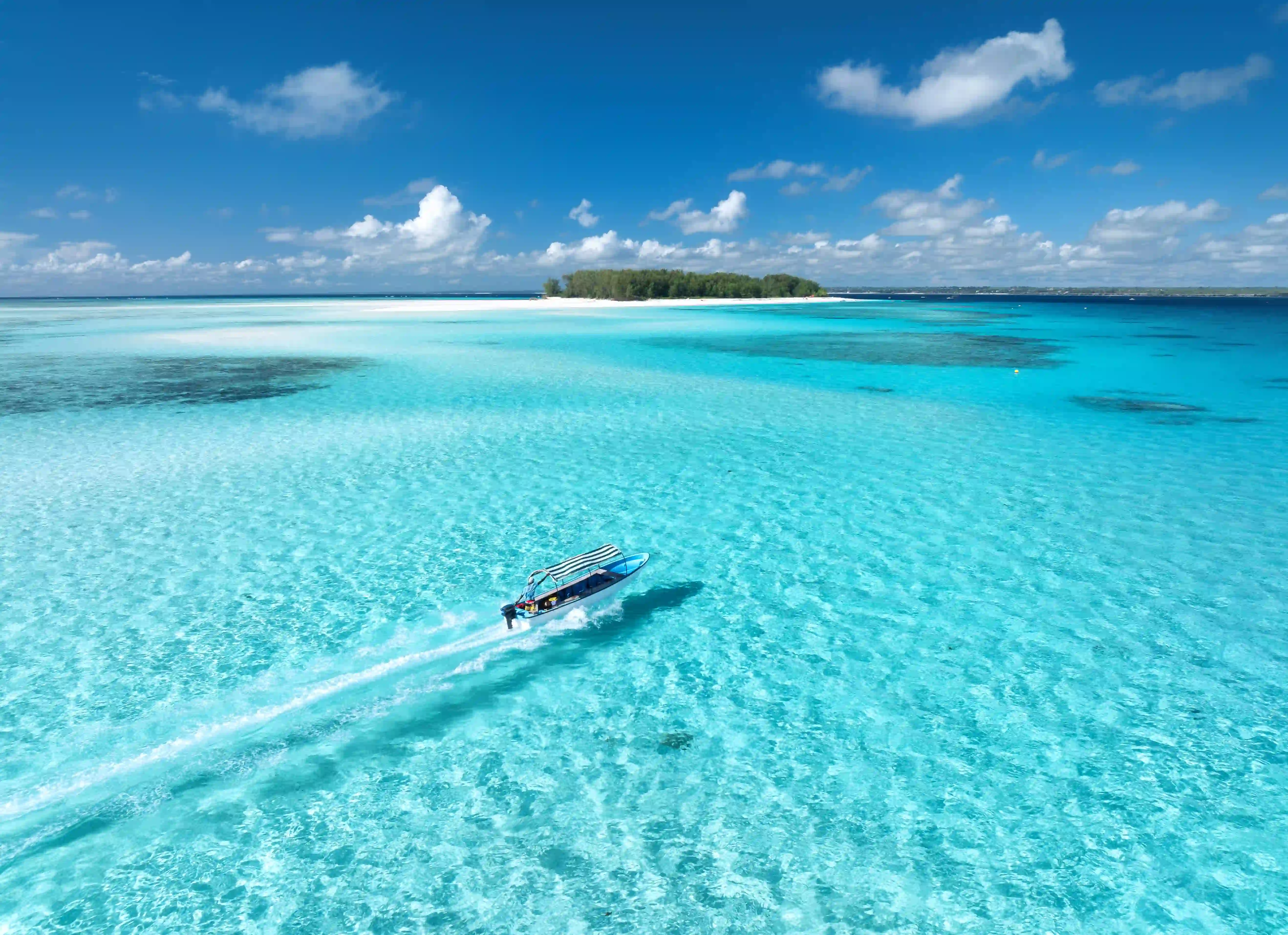
The turquoise waters and white-sand beaches of Zanzibar have long attracted tourists seeking an Indian Ocean paradise. Now, they're drawing a different crowd: real estate investors betting that this Tanzanian archipelago represents one of Africa's most promising property markets.
The numbers tell a compelling story. Zanzibar welcomed 736,755 international visitors in 2024, marking a 15.4% increase from the 638,498 arrivals recorded in 20231. This surge in tourism has created ripple effects throughout the local economy, with real estate emerging as a primary beneficiary. Hotels achieved a remarkable 92.4% bed occupancy rate during the December 2024 peak season, selling 720,102 of 779,216 available bed nights2.
For property investors, these occupancy rates translate directly into rental yields that significantly outperform many established markets. Well-managed beachfront villas in prime locations like Nungwi, Kendwa, Paje, and Jambiani now routinely deliver annual yields of 12-15%, according to market analyses compiled by local real estate firms3. These returns eclipse the 2-4% yields typical in Tanzania's commercial capital, Dar es Salaam, and compare favorably to many mature Indian Ocean destinations.
The Capital Appreciation Story
Beyond rental income, property values themselves have climbed steadily. Market data compiled from broker records and land registry transactions shows an island-wide compound annual growth rate of approximately 10% between 2019 and 20244. However, this headline figure masks significant variation across submarkets.
Beachfront properties in Nungwi and along the east coast have appreciated by 11-12% annually during this period, driven by Zanzibar's growing reputation in the global kitesurfing community, improved road access from the airport, and a wave of boutique villa developments that have set new price-per-square-meter benchmarks5. Properties in these locations saw a price index climb from 100 in 2019 to approximately 176 by 2024.
Stone Town heritage apartments, while still appreciating at a respectable 6-7% annually, have grown more slowly due to stricter UNESCO conservation regulations that cap supply but also lengthen renovation timelines6.
Who's Buying?
The investor profile skews heavily international. European buyers continue to dominate, mirroring Zanzibar's tourist demographics—71.6% of 2024's visitors came from Europe, with Italy, Germany, France, and Poland leading source markets7. But the mix is diversifying.
South African investors led African buyers in 2024, contributing 31,254 tourists and increasingly viewing Zanzibar as an accessible investment destination—just a short flight from Johannesburg. Kenyan buyers followed with 23,530 arrivals, reflecting East Africa's growing middle class and its appetite for regional hospitality investments8.
Gulf investors, particularly from the UAE and Saudi Arabia, have also entered the market in recent years, attracted by the island's Muslim-friendly tourism infrastructure and the potential for capital appreciation in an emerging market that reminds many of Dubai's early development phase.
Institutional Validation
Perhaps the strongest signal of market maturation came in January 2024, when Four Seasons Hotels and Resorts announced plans to develop a 60-villa luxury resort in Pongwe, on Zanzibar's eastern coast. The $100+ million project, developed in partnership with global investment firm Albwardy Investment, will span 126 acres of beachfront property9.
"Together, our shared vision for creating best-in-class experiences will soon introduce a new Four Seasons resort to a destination that luxury travelers already know and love," said Bart Carnahan, president of global business development at Four Seasons, in announcing the project10.
The Four Seasons entry represents the
first major international luxury hotel brand to commit to new construction in Zanzibar. While the 67-room Park Hyatt Zanzibar has operated in Stone Town since 2015, the Four Seasons project signals a new phase of institutional confidence in the market's long-term trajectory.
Infrastructure Investment Creates Upside
The Zanzibar government has committed $500 million to infrastructure development, with significant allocations toward road construction, airport expansion, and utility improvements11. These investments are already visible on the ground.
Abeid Amani Karume International Airport, which handled 646,830 visitors in 2024—87.8% of total arrivals—has undergone modernization to handle increasing capacity12. New direct flights from European and Middle Eastern hubs have reduced travel times and opened new source markets, contributing to the 15.4% year-over-year growth in arrivals.
Road improvements, particularly along the east coast corridor connecting the airport to Paje and surrounding beaches, have shortened travel times and improved access to previously remote beachfront parcels. This connectivity enhancement has been a key driver of the 12% annual appreciation rates observed in east-coast properties.
Legal Framework Attracts Foreign Capital
Unlike some African jurisdictions where property ownership by foreigners faces restrictions, Zanzibar has established a relatively straightforward legal framework. Foreign investors can acquire 99-year renewable leaseholds, which function much like freehold ownership in practice13.
The Zanzibar Investment Act of 2023, ratified in February 2024, introduced additional incentives specifically targeting foreign capital. Investors purchasing property valued at $100,000 or above qualify for residence permits valid for two years, covering spouses and up to four children14. While these permits don't confer work rights, they eliminate the previous requirement for quarterly "visa runs"—a significant quality-of-life improvement for property owners spending extended time on the island.
Transaction costs remain relatively modest. Stamp duty stands at 1% of purchase price, with transfer duty at 0.5%15. Rental income is taxed at 15% for non-residents, while capital gains face a 10% withholding rate16. These figures compare favorably to destinations like Mauritius, where higher property prices compound the impact of transaction fees.
The Risk Calculus
No emerging market comes without caveats. Zanzibar's property market, while growing, remains relatively illiquid. Sales cycles typically run 6-12 months, compared to 2-4 months in major metropolitan markets like London or Manhattan. Sellers must be prepared for longer timelines to find qualified buyers.
Currency exposure presents another consideration. The Tanzanian shilling has traded in a relatively stable band around 2,730 per US dollar, but any meaningful depreciation would erode dollar-denominated returns for foreign investors17. Prudent investors hedge this risk by matching their purchase currency with their return expectations—those seeking shilling-denominated rental income can benefit from local currency appreciation, while dollar-based buyers should factor potential exchange rate volatility into their models.
Supply constraints, while currently supporting price appreciation, could shift if the wave of new developments now under construction floods the market simultaneously. Approximately 600-800 new units are expected to complete across Zanzibar between 2025-202618. Whether the market can absorb this inventory without price pressure depends largely on whether tourism growth continues its current trajectory.
The Forward View
Tourism infrastructure continues to strengthen. The government projects international arrivals will approach 800,000 by the end of 2025, maintaining the growth momentum that has characterized the post-pandemic recovery19. New flight routes continue to open, with particular focus on expanding Gulf connections and adding European departure points.
The confluence of factors—record tourism growth, institutional investor validation via the Four Seasons entry, improving infrastructure, and a maturing legal framework—has created what many analysts view as a narrow window for advantaged entry. Whether Zanzibar evolves into the "next Bali," as some boosters claim, or faces the growing pains typical of rapidly developing destinations, remains to be seen.
What's clear is that the luxury real estate market has moved well beyond speculative positioning. With occupancy rates above 90% during peak seasons, rental yields in the low double digits, and property appreciation running at 10-12% annually in prime locations, the market has established metrics that meet institutional standards for emerging market performance.
For investors willing to accept the illiquidity and currency considerations inherent in frontier markets, Zanzibar's combination of tourism tailwinds, capital appreciation, and yield generation presents a rare convergence of factors—one that typically appears only in the early stages of market development, before broader recognition drives prices to mature-market levels.
Related Topics: Tanzania real estate investment, Indian Ocean property markets, emerging market hospitality investments, beachfront villa returns, African tourism growth
Footnotes
- Office of the Chief Government Statistician and Zanzibar Commission for Tourism, "Zanzibar Annual Tourism Report 2024," reported by TanzaniaInvest, April 2025. ↩
- The Citizen, "South Africa and Kenya among top tourism sources for Zanzibar in December 2024," January 8, 2025. ↩
- Vela Zanzibar, "Zanzibar Property Investment 2025: Prices & 12–15% Yields," market analysis report, 2025. ↩
- Vela Zanzibar, "Zanzibar Real Estate Market 2025: Prices, Yields & Forecast," market analysis based on ZIPA transaction data, 2025. ↩
- Ibid. ↩
- Ibid. ↩
- Office of the Chief Government Statistician and Zanzibar Commission for Tourism, "Zanzibar Annual Tourism Report 2024." ↩
- Sputnik Africa, "Zanzibar Has Experienced Tourism Boom in 2024," April 15, 2025. ↩
- Four Seasons Hotels and Resorts, "Four Seasons and Albwardy Investment Announce New Property in Tanzania with Luxury Resort in Zanzibar," press release, January 9, 2024. ↩
- Ibid. ↩
- The Africanvestor, "6 statistics for the Zanzibar real estate market in 2025," January 15, 2025. ↩
- Office of the Chief Government Statistician and Zanzibar Commission for Tourism, "Zanzibar Annual Tourism Report 2024." ↩
- Vela Zanzibar, "Zanzibar Real Estate Market 2025: Prices, Yields & Forecast." ↩
- Vela Zanzibar, "Zanzibar Property Investment 2025: Prices & 12–15% Yields." ↩
- Vela Zanzibar, "Zanzibar Real Estate Market 2025: Prices, Yields & Forecast." ↩
- Ibid. ↩
- Ibid. ↩
- Vela Zanzibar, "Zanzibar Property Investment 2025: Prices & 12–15% Yields." ↩
- TanzaniaInvest, "Zanzibar Tourist Arrivals Increase by 15.4% in 2024 to Reach Record High of 736,755," April 2025. ↩
Read more about the progress
Stay informed with our latest updates and insights on real estate trends and tips.