Zanzibar's Architectural Revolution: Where Five Centuries of Swahili Design Meets Contemporary Form

Reading time: 5 minutes
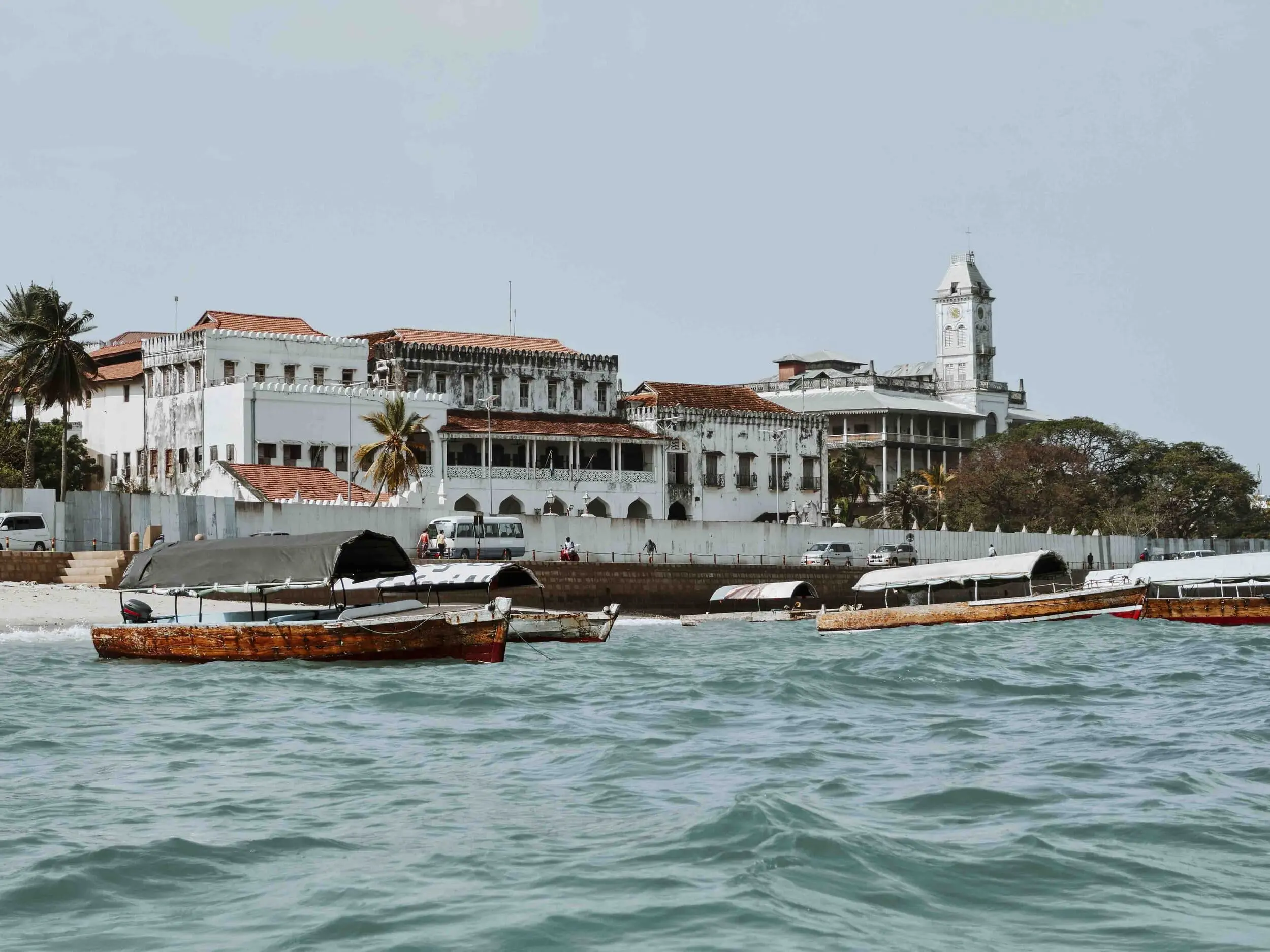
STONE TOWN, Zanzibar — Walk through Stone Town's narrow streets on any given afternoon, and you'll pass doorways that have welcomed traders, sultans, and storytellers for five hundred years. The carved wooden doors—each one unique, each one heavy with symbolism that speaks to the family's origins, faith, and status—represent an architectural heritage that few places on earth can match.
Now, a new generation of architects is asking a provocative question: what does that heritage look like when translated into contemporary form, when centuries of accumulated building wisdom confronts the demands of modern luxury living?
The answers emerging along Zanzibar's coastline are nothing short of remarkable.
The Birth of Swahili Modern
Glass walls that frame the Indian Ocean where coral stone once blocked the tropical sun. Open floor plans that flow seamlessly into infinity pools and outdoor living spaces—yet retain the courtyard logic that made traditional Swahili homes naturally cool centuries before air conditioning existed. Materials both ancient and modern coexisting in unexpected harmony: coconut wood beams supporting roofs that bristle with solar panels, coral stone walls backing kitchens equipped with induction cooktops and smart appliances.
Architects working on the island have begun calling this fusion "Swahili Modern"—a term that captures the creative tension at the movement's heart.
"It's not pastiche, not the theme-park approach of slapping carved details onto concrete boxes," explains Amina Hassan, a Dar es Salaam-based architect whose Zanzibar projects have won international recognition. "It's something more ambitious: a genuine attempt to evolve a living tradition rather than embalm it in nostalgia."
The best examples achieve something genuinely difficult: buildings that feel unmistakably of this place while meeting the expectations of buyers accustomed to international luxury standards. They acknowledge that traditional Swahili architecture evolved over centuries to solve precisely the problems modern buildings face—problems that don't require reinvention but creative interpretation.
Ancient Solutions to Modern Problems
How to stay cool in tropical heat without bankrupting yourself on energy costs? Traditional Swahili homes answered this through thick coral stone walls (thermal mass that absorbs heat during the day and releases it at night), strategic window placement for cross-ventilation, and makuti palm-frond roofing that provides natural insulation.
How to create privacy while maintaining community connection? Courtyard designs that opened inward to private family spaces while presenting discrete facades to public streets—a pattern that contemporary architects are reinterpreting with internal atriums and layered privacy zones.
How to build durably in a marine environment that punishes shortcuts? Coral stone construction that withstands salt air and tropical storms, protected by deep roof overhangs that shed rainfall while providing essential shade.
These weren't arbitrary aesthetic choices. They were survival strategies developed over generations by people who had no choice but to work with their environment rather than against it. The wisdom embedded in those solutions remains relevant—arguably more relevant as climate change and energy costs make environmental performance a competitive necessity rather than a marketing afterthought.
The Material Palette: Old Meets New
The material palette tells its own story of synthesis and evolution. Coral stone, quarried from the island for generations, provides thermal mass that keeps interiors cool during the day and releases stored heat after sunset—properties no manufactured material can replicate.
Makuti roofing—woven palm fronds that have sheltered Swahili coast inhabitants for millennia—offers natural insulation and rainwater management that synthetic materials struggle to match. When properly installed and maintained, a makuti roof lasts 7-10 years and biodegrades completely, unlike the petroleum-based roofing materials that will fill landfills for centuries.
Coconut wood, harder and more durable than many hardwoods, provides structural elements with a grain pattern and natural beauty that no engineered product can replicate. Local craftsmen have worked this wood for generations, understanding its properties in ways that imported workers never could.
Modern additions complement rather than compete: aluminum window frames that enable the floor-to-ceiling glazing contemporary buyers expect while maintaining structural integrity. Engineered concrete foundations that provide stability coral stone alone cannot achieve in multi-story construction. Advanced waterproofing systems that extend building lifespans well beyond traditional construction while respecting traditional aesthetics.
"The synthesis requires understanding both old and new," notes David Mwakaje, a construction manager who's worked on over 40 luxury developments. "You need stonemasons who understand coral's properties—how it absorbs water, how it responds to stress, how to select pieces that will last generations. You need woodworkers trained in traditional carving techniques who can also work with modern sealants and preservation treatments. Finding and retaining these craftspeople has become a competitive advantage."
The Craftsmen: Preserving Endangered Skills
The architectural ambitions require craftsmanship that's increasingly rare. Master stonemasons who understand coral's peculiar properties—how pieces from different quarries behave differently, which sections will bear load and which are decorative, how to create thermal mass without excessive weight.
Traditional woodworkers who can execute intricate carvings while meeting modern structural requirements. Thatchers who can install makuti roofing to standards that satisfy both aesthetic aspirations and building codes that didn't exist when their grandfathers learned the craft.
Several developers have established training programs that function as unofficial schools for endangered building arts. Young people apprentice with master craftsmen for 2-3 years, learning techniques that might otherwise disappear within a generation.
"These skills took centuries to develop," explains Hassan Juma, a master carpenter who runs one such program. "If we lose them, we lose part of our identity—and we lose the ability to maintain the buildings that define Stone Town's character. Training the next generation isn't charity. It's cultural preservation."
International Influences, Local Interpretation
The movement hasn't evolved in isolation. Architects are drawing inspiration from vernacular building traditions worldwide, finding parallels between Swahili solutions and those developed in other hot, coastal climates.
Mediterranean courtyard houses that solved similar privacy and cooling challenges. Japanese minimalism that emphasizes natural materials and connection to landscape. Balinese pavilion architecture that blurs boundaries between interior and exterior. Brazilian modernism that proved concrete and tropical luxury could coexist.
But the best work remains distinctly Zanzibari, filtering international influences through local sensibility rather than importing foreign aesthetics wholesale. You see it in details: carved coral panels that echo traditional doors but in contemporary patterns. Window grilles that provide privacy and shade while allowing breezes to flow. Furniture designs that reference Swahili forms but in sleek, modern interpretations.
The Stakes of Getting It Right
The architectural choices being made today will define Zanzibar's visual identity for generations. Get it wrong, and the island risks becoming another generic tropical destination—interchangeable with a hundred other beach towns where international hotel chains have imposed their globalized aesthetics on landscapes that once had distinctive character.
Get it right, and these buildings will stand as proof that growth needn't erase character, that modern comfort and cultural continuity can share the same foundation, that progress and preservation can advance together rather than in opposition.
The pressure is considerable. Buyers arriving from London or Dubai or Nairobi bring expectations shaped by what they've seen elsewhere. The temptation to deliver familiar forms—the Balinese villa, the Mediterranean white cube, the generic "tropical modern" that dominates resort architecture worldwide—is constant.
Resisting that temptation requires conviction that authenticity has commercial value, that buyers will pay premiums for buildings that couldn't exist anywhere else. Early market evidence suggests that conviction is justified—properties that successfully blend traditional and contemporary elements command price premiums averaging 15-20 percent over generic luxury construction.
UNESCO Recognition and Future Direction
The architectural movement has attracted attention beyond commercial circles. UNESCO, which designated Stone Town as a World Heritage Site in 2000, has been monitoring contemporary development with interest. While no contemporary projects have received heritage designation (UNESCO's focus remains historical preservation), officials have noted that Swahili Modern represents "a thoughtful evolution of vernacular tradition rather than abandonment of it."
Looking forward, several architects are pushing the movement into new territory: experimenting with rammed earth construction using island soil, developing passive cooling systems that eliminate air conditioning entirely, and exploring bio-based materials that could reduce embodied carbon while maintaining luxury aesthetics.
"The next phase is figuring out how to make sustainable luxury not just beautiful but genuinely sustainable," says Hassan. "Not greenwashed marketing claims, but buildings that could exist for centuries with minimal environmental impact. That's where traditional building wisdom and contemporary technology need to converge."
A Living Tradition
The carved doors of Stone Town survived Portuguese cannons and Omani rule and British colonialism and the upheavals of independence. They survived because each generation found them worth preserving—worth the effort of maintenance, worth the cost of skilled craftsmen, worth the patience that traditional building demands.
The question is whether the architectural ambition rising around them will prove equally enduring. Whether the Swahili Modern movement will mature into a genuine tradition or fade as a footnote in architectural history.
The next decade will likely provide the answer—but the early evidence suggests something significant is being built here, one carefully considered building at a time. Something that honors the past while embracing the future. Something that could only exist in this place, shaped by these particular tensions between tradition and transformation.
Something worth preserving for the next five hundred years.
Read more about the progress
Stay informed with our latest updates and insights on real estate trends and tips.